The Fine and Messy Art of Learning to Control a Spoon
 When I first began helping children learn to eat, I was fascinated by the intricate skill it takes for a toddler to pilot a flying spoon from the moment of “table takeoff” to eventually landing on that tiny pink runway known as the tongue. I suppose my role as a feeding therapist is a bit like flight school, where all of the skills are learned step by step and flying becomes so automatic that eventually, it all goes quite smoothly. My favorite tool for teaching any child the basic steps of spoon feeding is the Baby Dipper Bowl ®, which is essentially a “spoon simulator”, much like a flight simulator, only a lot less expensive. Here are the steps to learning how to steer the spoon safely from fist to bowl to mouth:
First and foremost, make sure the pilot is securely fastened. Children are ready for self-feeding with a spoon if they can sit up in a supportive high chair on their own. Hips should be at a 90 degree angle, with a slight arch in the back. If possible, depending on the type of feeding chair, knees should also be bent at 90 degrees. No matter what, a child’s feet must be supported by a foot rest so that they are not wobbling on their seat bones. That’s a lot to focus on while trying to eat and we don’t want a distracted, wobbly pilot! Table top or tray top should be at “sternum height” otherwise known as that tickle point right where your ribs meet in the center of your chest, thus not so low that the flight distance from tray to mouth makes eating haphazard. If you have a child with special needs and/or difficulties with fine motor control, your feeding therapist can provide additional suggestions on how to make sure their entire body is secure and stable while they are seated so they can learn to control the spoon.
The first mechanical step for little munch bugs learning to fly a spoon is knowing how to pick it up in their miniature fists. Ideally, I offer a short, fat-handled spoon that has also has slight curve in the handle, just like the one that comes with the Baby Dipper Bowl®. This automatically sets them up for success because the closer their little fist is to the bowl, the easier they will be able to guide the bowl eventually to the mouth with minimal mess. Try picking up just the very end of a long, thin handled ice tea spoon and spooning out some pureed peas and see how easily you can get them to glide past your own lips. It’s not easy! Kids feel more confident and have better control of a flying spoon when it is stable in their grasp.
The second step is dipping. Scooping comes later. Put a coin-sized circle of puree at the top of the non-slip Baby Dipper Bowl® and help your child dip into it with the tip of the spoon. They may try to bring the spoon tip back up to their mouth, turning the spoon upside down in the process, which is fine. The intricacies of wrist rotation is a more advanced skill and dipping is just like the “touch and go” exercises that a pilot practices by approaching the landing strip from the air, gliding downward and lightly touching the runway before rising up into the air once more.
The Baby Dipper Bowl® has an ingeniously contoured interior or “sliding board” that guides the child’s hand from dipping to scooping. Dip, slide, scoop up and you are flying! Thus, the third step is to lightly coat the slide with just enough of a yummy puree that your kiddo keeps the bowl of the spoon on the slide all the way through the scoop before maneuvering it back into the air. This will fill the bowl of the spoon with just enough puree to minimize spills and help him/her focus on the next step, the 45 degree turn. Yes, it’s time to turn this aircraft and prepare to land behind that adorable little grin!
Here’s where your munch bug might need a co-pilot. Although you can try “hand over hand” (your hand on his/her fist) to guide the plane, your toddler might be less resistant to your hand gently cupping his elbow. Provide just enough support to stabilize the elbow and your child will be able to gain better control of his own hand while rotating his wrist in order to land the bowl of the spoon smoothly on the tongue.
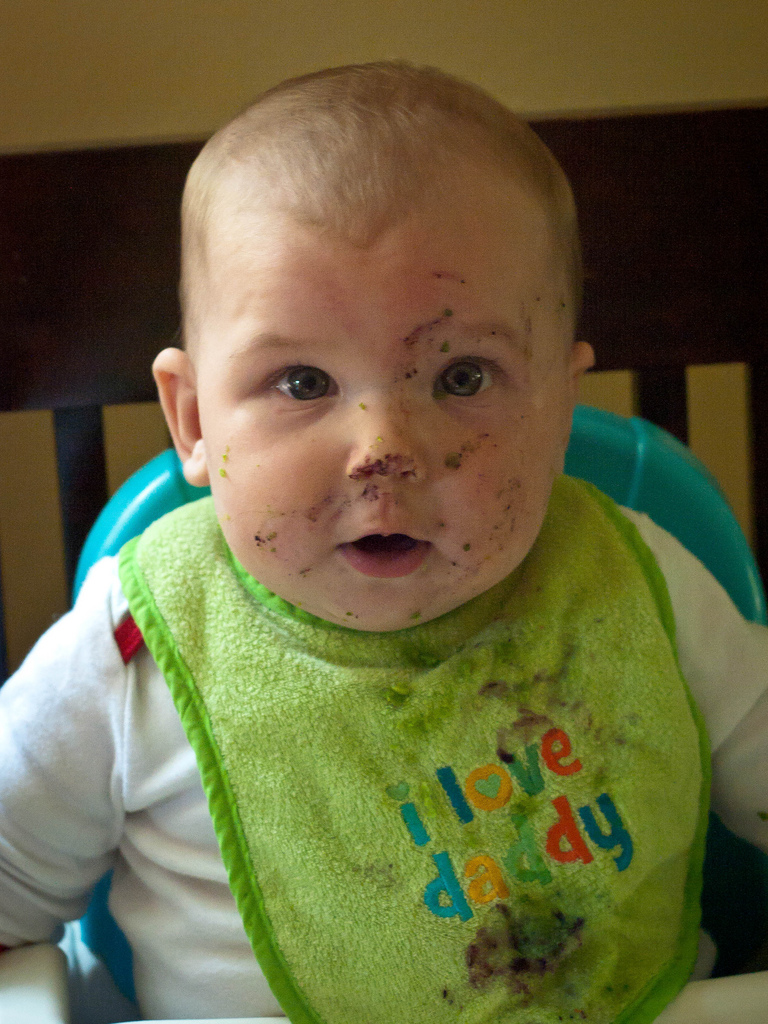
Final step: Practice! Kid are meant to be messy and in fact, feeding therapists recommend that kids play in food and get messy at the dinner table in order to engage all of their senses in the process of learning about new tastes, temperatures and textures. The steps above are simply to allow more nutritious food to get to the final destination: the tummy!
Ready for a more advanced aircraft? Once your child has mastered the spoon, progress to the fork included with the Baby Dipper Bowl®. Use the same steps outlined above, this time focusing on piercing the food at the bottom of the slide rather than scooping, and most of all, enjoy the journey!
 Melanie Potock, MA, CCC-SLP is a national speaker on the topic of picky eating and the author of Happy Mealtimes with Happy Kids: How to teach Your Child about the Joy of Food!
 With over 15 years’ experience treating children with feeding difficulties, Mel’s approach to developing feeding skills includes the fundamentals of parenting in the kitchen, such as how to avoid mealtime debates and creating more joyful mealtimes, even with a hesitant eater.
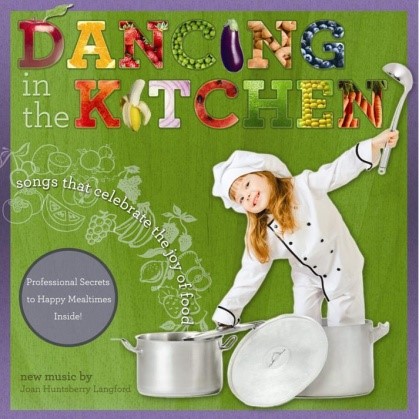
Mel wrote this book in the same manner that she works with families; with an open heart and a touch of humor. She has also produced the award winning children’s CD Dancing in the Kitchen: Songs that Celebrate the Joy of Food.
Both products are available on her website at www.mymunchbug.com.
Photo Credit: devinf via Compfight cc
Tagged under: development, feeding, feeding therapist, kids, learning, lessons, parenting tips